
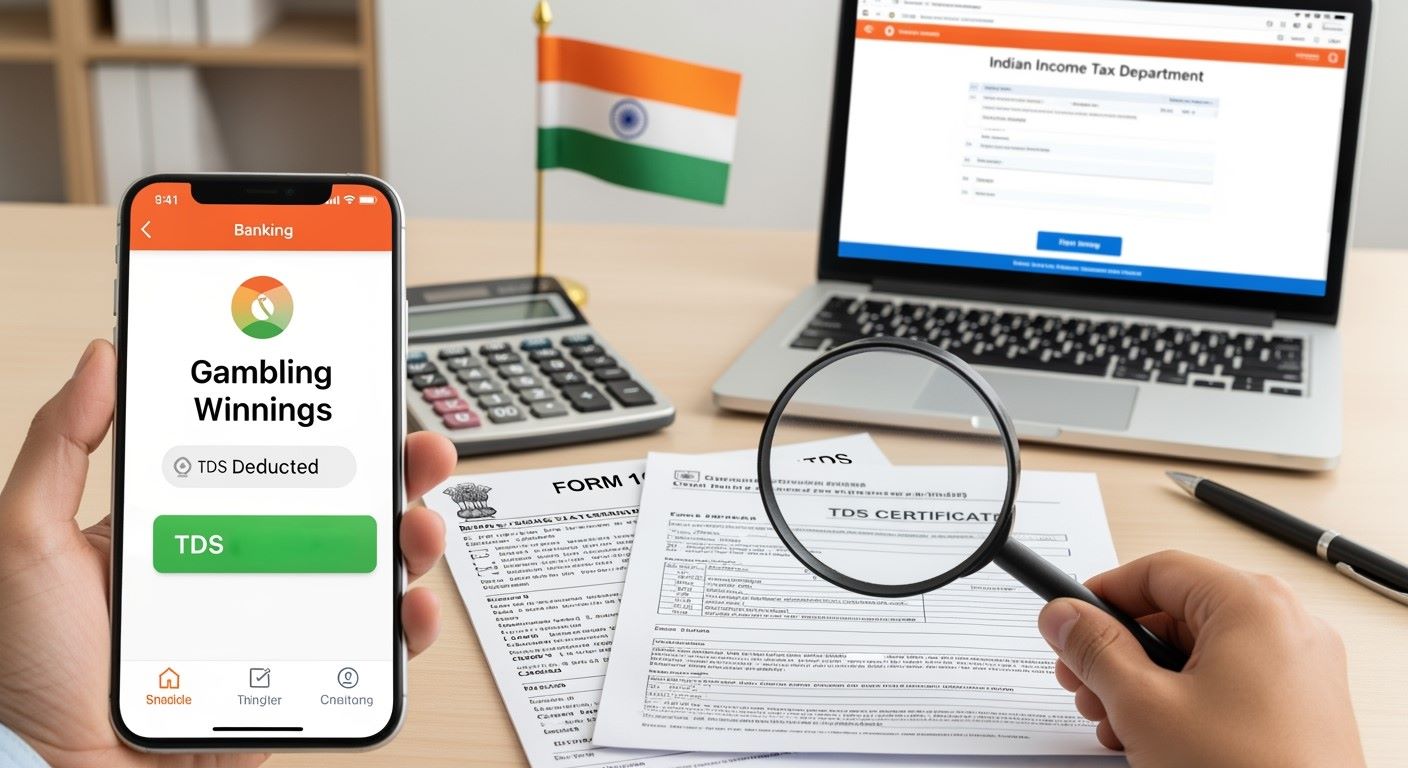
In India, all gambling winnings are subject to income tax at a flat rate, regardless of the amount or type of game played. This comprehensive taxation applies to earnings from casinos, lotteries, horse racing, card games, and online gaming platforms without any exceptions or thresholds for small winnings.
Proper verification of gambling winnings is crucial for maintaining tax compliance and avoiding unwanted scrutiny from tax authorities. The Income Tax Department has significantly increased its focus on digital transactions and gaming income, making accurate documentation essential for every taxpayer who engages in gambling activities.
Understanding Tax Rules for Gambling Winnings in India
The taxation of gambling winnings in India is governed primarily by Section 115BB and Section 115BBJ of the Income Tax Act. These provisions establish a uniform framework that treats all gambling income as taxable at source, ensuring consistent application across different types of gaming activities.
Under current tax laws, gambling winnings are subject to a flat 30% tax rate with no deductions allowed for losses or expenses. This income must be reported under the category of ‘income from other sources’ in your tax return, making proper documentation critical for accurate filing.
The Tax Deducted at Source (TDS) mechanism applies to most gambling winnings, with operators required to deduct tax at the time of payout. This system ensures immediate tax collection while providing winners with certificates that serve as proof of tax payment for their annual returns.
| Type of Winnings | Tax Rate | TDS Applicability | Reporting Requirement |
|---|---|---|---|
| Online Gaming (Skill-based) | 30% (Section 115BBJ) | On net winnings above ₹10,000 | Income from Other Sources |
| Lottery/Casino/Horse Racing | 30% (Section 115BB) | On winnings above ₹10,000 | Income from Other Sources |
| Card Games/Crossword Puzzles | 30% (Section 115BB) | On winnings above ₹10,000 | Income from Other Sources |
| Sports Betting | 30% (Section 115BB) | On winnings above ₹10,000 | Income from Other Sources |
Key Differences: Skill-based vs. Chance-based Winnings
While the gambling industry often distinguishes between games of skill and games of chance, the Indian tax framework treats both categories uniformly. This approach simplifies compliance but requires players to understand that skill-based gaming platforms are subject to the same rigorous tax requirements as traditional gambling venues.
The recent amendments to Section 115BBJ specifically address online gaming, ensuring that platforms offering skill-based games like rummy, poker, and fantasy sports follow identical TDS and reporting procedures as chance-based gambling operations.
| Category | Examples | Tax Treatment |
|---|---|---|
| Skill-based Gaming | Rummy, Poker, Fantasy Sports, Quiz Games | 30% flat rate, same reporting requirements |
| Chance-based Gambling | Lottery, Casino Slots, Bingo, Lucky Draws | 30% flat rate, identical compliance framework |
When TDS Is Deducted and Special Cases
TDS on gambling winnings is triggered when the winning amount exceeds ₹10,000 in a single transaction or cumulative winnings from the same platform. For online gaming platforms, TDS applies to net winnings, which means the winning amount minus the entry fee or stake for that particular game.
Special considerations apply to foreign nationals and non-resident Indians, who may benefit from Double Taxation Avoidance Agreements (DTAA) with their country of residence. However, TDS is still deducted at source, and any relief must be claimed through the annual tax return process.
In cases where platforms fail to deduct TDS or where winnings fall below the threshold but aggregate to significant amounts annually, players remain responsible for self-assessment and voluntary tax payment to maintain compliance with income disclosure requirements.
Essential Documentation to Prove Winnings
Maintaining comprehensive documentation of gambling winnings is fundamental to successful tax verification and compliance. The Income Tax Department expects taxpayers to provide clear, verifiable proof of all gambling income, including detailed transaction records and supporting financial documentation.
Proper documentation serves multiple purposes: it validates the income declared in your tax return, supports any claims for TDS credit, and provides essential evidence during tax audits or scrutiny proceedings. The key is to maintain organized records that clearly establish the source, timing, and amount of each winning.
- TDS certificates (Form 16A) issued by gaming operators and lottery organizations
- Win notification emails and SMS confirmations from gambling platforms
- Bank statements showing credit of winning amounts with clear transaction descriptions
- Platform-generated account statements and transaction histories
- Screenshots of winning confirmations and payout acknowledgments
- Receipt vouchers for physical lottery tickets and casino payouts
How to Obtain and Store TDS Certificates
TDS certificates are the most critical documents for verifying gambling winnings, as they provide official confirmation of tax deducted and serve as credit against your total tax liability.
- Contact the gaming platform’s customer service department within 30 days of winning to request your TDS certificate
- Download certificates from the operator’s website or mobile app, usually available in the ‘Tax Documents’ or ‘My Account’ section
- Verify that all details on the certificate match your PAN, winning amount, and tax deducted
- Create both physical and digital backups, storing certificates in clearly labeled folders organized by financial year
- Cross-reference certificate details with your bank statements to ensure consistency in amounts and dates
- Maintain a master spreadsheet tracking all TDS certificates with platform names, amounts, and certificate numbers for easy reference
Record-Keeping Best Practices
Effective record-keeping goes beyond simply collecting documents; it involves creating a systematic approach that ensures all gambling-related financial activities are properly documented and easily accessible for tax purposes.
- Save all transaction confirmation emails in a dedicated folder, organizing them chronologically by platform and financial year
- Print and store physical copies of significant win notifications and payout receipts as backup documentation
- Maintain detailed win/loss statements from each gambling platform, reconciling them with your bank account credits
- Document any gambling-related expenses that might be relevant for verification, such as travel costs for casino visits
- Keep records of failed transactions or disputed winnings that might affect your overall income calculation
Reporting Gambling Income in Your Tax Return
Filing gambling income correctly in your income tax return requires careful attention to detail and precise categorization under the appropriate sections. The process involves selecting the correct ITR form, accurately declaring income under ‘income from other sources’, and ensuring that all TDS entries match your supporting documentation.
Consistency between your income proof and tax return entries is crucial for avoiding discrepancies that could trigger tax notices or audit proceedings. Every rupee of gambling income must be accounted for, regardless of whether TDS was deducted or not.
- Choose ITR-2 or ITR-3 forms as ITR-1 does not accommodate gambling income reporting
- Navigate to the ‘Income from Other Sources’ section and locate the gambling winnings subsection
- Enter gross winning amounts for each source separately, clearly identifying the type of gambling activity
- Input corresponding TDS amounts in the tax deducted section, ensuring exact matching with your TDS certificates
- Calculate net tax liability after adjusting for TDS credits and any advance tax payments made during the year
- Upload supporting documents including TDS certificates and winning proofs through the document upload facility
- Verify all entries before final submission and retain acknowledgment receipt for your records
What to Do If TDS Is Not Deducted?
When gambling operators fail to deduct TDS or when winnings fall below the TDS threshold but still constitute taxable income, players must take proactive steps to ensure tax compliance. Self-assessment becomes crucial in these scenarios to avoid potential penalties and interest charges.
Calculate your tax liability manually using the 30% flat rate on all gambling winnings, regardless of the amount. Pay this tax voluntarily through advance tax or self-assessment tax options available on the income tax portal before filing your return.
Maintain detailed records of all self-assessed tax payments, including challan receipts and bank debits, as these serve as proof of voluntary compliance and demonstrate good faith efforts to meet tax obligations without enforcement action.
Audit Risks and Common Verification Scenarios
Tax audits related to gambling winnings typically arise from discrepancies in income reporting, mismatched TDS records, or unusually high winnings that attract departmental attention. Understanding common audit triggers helps taxpayers prepare comprehensive responses and maintain proper documentation standards.
The Income Tax Department increasingly uses data analytics to identify potential non-compliance, cross-referencing bank deposits, TDS records, and declared income to flag inconsistencies. Proactive documentation and transparent reporting significantly reduce audit risks and facilitate smoother verification processes.
High-value winnings, frequent gambling activities, and multiple platform usage create elevated scrutiny profiles that require enhanced documentation and professional tax planning to ensure compliance and minimize verification challenges.
| Scenario | Required Evidence | Tax Authority Focus |
|---|---|---|
| Mismatched TDS Records | Original TDS certificates, revised certificates, platform correspondence | Verification of actual tax deducted vs. claimed credit |
| High-Value Single Winnings | Complete game transaction history, stake amount proofs, platform verification | Authenticity of winnings and legitimacy of gaming platform |
| Multiple Platform Usage | Comprehensive account statements from all platforms, consolidated winning summary | Complete income disclosure and consistent reporting across platforms |
| Unexplained Bank Deposits | Source-wise deposit mapping, platform payout confirmations, transaction trail | Establishing clear link between deposits and declared gambling income |
| Foreign Platform Winnings | Foreign exchange records, platform registration details, DTAA applicability proof | Tax treaty benefits and proper income characterization |
Sample Notices and How to Respond
Tax notices related to gambling winnings typically request clarification on income sources, verification of TDS claims, or explanation of bank deposit patterns that don’t match declared income.
- Respond within the specified time limit, usually 30 days from notice date, with complete documentation and detailed explanations
- Provide a comprehensive reply addressing each query point-wise with supporting evidence and cross-references to filed returns
- Submit original documents or certified copies as requested, maintaining personal copies for future reference
- Consider professional assistance for complex notices involving multiple years or substantial amounts to ensure proper representation
Verification Pitfalls and How to Avoid Them
Common verification errors can significantly complicate tax compliance and create unnecessary audit risks that could be easily avoided with proper planning and documentation practices.
- Avoid incomplete TDS record maintenance by regularly downloading and verifying all certificates from gaming platforms throughout the year
- Prevent under-reporting by maintaining comprehensive records of all winnings, including those below TDS thresholds that still constitute taxable income
- Eliminate bank statement inconsistencies by clearly linking all gambling-related deposits to their respective sources with proper documentation
- Avoid delayed compliance by filing returns on time and making advance tax payments for significant winnings to prevent interest and penalty charges
- Prevent documentation gaps by establishing systematic record-keeping procedures that capture all gambling transactions and related financial activities
GST and Other Statutory Compliance
Goods and Services Tax (GST) implications for gambling winnings primarily affect platform operators rather than individual players, but understanding these interactions is important for comprehensive compliance awareness. GST does not serve as a substitute for income tax obligations on gambling winnings.
Gaming platform operators pay GST on their services, which is typically built into the platform fees or entry charges rather than being separately charged to players. This GST component does not reduce or affect the income tax liability on winnings received by players.
| Aspect | Applicability | Impact on Verification |
|---|---|---|
| GST on Gaming Services | Platform operators pay GST on entry fees and commissions | No impact on player’s income tax liability verification |
| TDS vs. GST | Separate compliance requirements with different tax authorities | GST receipts cannot be used as income proof for IT purposes |
Interaction of GST, TDS, and Income Tax in Winnings Disclosure
The overlap between GST on gaming services and income tax on winnings creates distinct compliance requirements that operate independently. Platform operators handle GST compliance for their services, while players remain solely responsible for income tax compliance on their winnings.
Understanding this separation is crucial for maintaining accurate records and avoiding confusion during tax verification processes, as GST-related documentation serves different purposes and cannot substitute for income tax compliance requirements.
Professional Tips for Smooth Tax Verification
Implementing professional-grade tax management practices significantly reduces verification risks and creates a comprehensive audit trail that demonstrates proactive compliance. These strategies help secure refunds for excess TDS while maintaining transparent relationships with tax authorities.
- Reconcile TDS certificates quarterly with platform records and bank statements to identify discrepancies early and resolve them before filing returns
- Maintain separate bank accounts or clear segregation for gambling-related transactions to simplify income tracking and verification processes
- Track cumulative winnings across all platforms using spreadsheet tools to monitor annual income thresholds and tax obligations
- Set aside tax provisions for winnings where TDS is not deducted to avoid cash flow issues during tax payment periods
- Document all gambling losses systematically, even though they’re not deductible, to provide context during audit situations
- Establish regular communication with platform customer service teams to ensure timely receipt of tax documents and resolution of discrepancies
Using Tax Portals & Digital Tools for Tracking
Leveraging government tax portals and digital tracking tools streamlines compliance management and provides real-time access to tax-related information that supports accurate verification.
- Use the Income Tax Department’s e-filing portal to track TDS credits and match them with your certificates for comprehensive reconciliation
- Access Form 26AS regularly to monitor TDS reported by different deductors and identify any missing or incorrect entries
- Utilize mobile apps and online tools specifically designed for tracking gambling income and tax obligations across multiple platforms
- Implement cloud-based document storage solutions to maintain secure, accessible backups of all tax-related documentation
When to Seek Expert Help
Complex gambling income scenarios, substantial winnings, or receipt of tax notices warrant professional consultation to ensure optimal compliance and minimize potential penalties. Tax professionals bring specialized knowledge of gambling taxation and experience handling verification proceedings.
Consider engaging qualified chartered accountants or tax advisors when dealing with cross-border winnings, multiple income sources, or situations involving significant amounts that could trigger detailed scrutiny from tax authorities.